Before the First Chord: Why the Path Through Our Museum Shapes Everything You Feel About Rock History
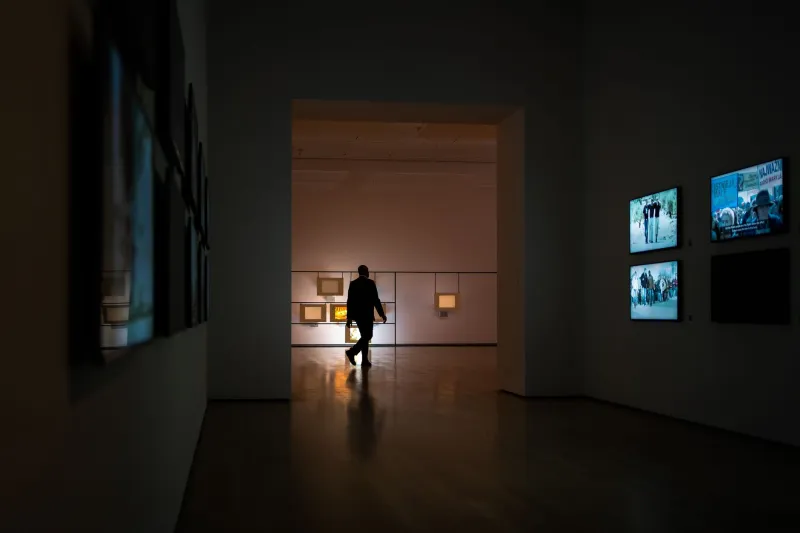
There's a moment that happens to almost every visitor somewhere around the midpoint of our museum floor. They stop. They look back at where they came from, then forward at where they're headed, and something clicks. The individual figures they've seen stop feeling like separate exhibits and start feeling like chapters in a single, unfolding story.
That moment doesn't happen by accident.
At Rock Legends Wax Museum, we spend as much time debating the order of our exhibits as we do the figures themselves. Because here's the thing our curators have learned after years of watching thousands of visitors move through this space: the sequence you experience rock history in doesn't just color your visit — it fundamentally determines what you take home with you.
The Setlist Principle
Any serious rock fan knows that a great setlist isn't just a list of songs. It's an argument. It makes a case for something — a mood, a story, a feeling the band wants you to carry out of the arena and into the parking lot.
The same logic applies here. When you walk through our doors, you're not just browsing a collection. You're being guided through a narrative that our team has spent months, sometimes years, refining. Every placement decision is a deliberate editorial choice about how one legend's story should set up the next one's.
Think about what happens when you meet Chuck Berry early in your visit. You're absorbing the raw electric swagger that invented the vocabulary of rock guitar. By the time you reach Jimi Hendrix twenty minutes later, you're not just seeing a virtuoso — you're seeing what happens when that vocabulary gets stretched into something almost unrecognizable. The connection lands differently. It hits harder. You feel the evolution rather than just reading about it on a placard.
Flip that order, and the experience changes entirely. Hendrix first, Berry second — suddenly Berry feels like a footnote rather than a foundation. The story gets told backward, and something essential gets lost.
The Elvis Question
Nothing in our layout debates gets more heated than the question of where Elvis lives in the visitor journey.
Place him at the beginning, and he functions as the big bang — the singular explosion from which everything else radiates outward. Visitors absorb the rest of the museum through an Elvis-shaped lens, measuring every subsequent legend against that original seismic event. It's a powerful frame, but it can make the story feel almost too tidy. Too origin-story neat.
Place him after The Beatles, and something fascinating happens. Visitors who grew up with the British Invasion as their entry point into rock history suddenly have to reckon with what came before the thing they thought was the beginning. Elvis stops being a nostalgia piece and becomes a revelation. The chronological logic forces a reappraisal.
Our current layout threads this needle deliberately. We've positioned Elvis in a way that lets him serve as both anchor and disruptor depending on which direction visitors approach from — and yes, we've actually designed the floor plan to allow for multiple entry paths into that section. It's one of the sneakier things we've built into the space, and most visitors never consciously notice it.
Pacing Is Everything
One thing that separates a great concert from a forgettable one isn't just the songs — it's the breathing room between them. The moment after a blistering opener when the lights drop and the band lets the crowd exhale before launching into something slower and more devastating.
We build that into our floor plan too.
After a dense cluster of hard rock legends — the kind of exhibit section that genuinely makes your pulse quicken — we've deliberately placed a more intimate, stripped-down space. Acoustic-era figures. Singer-songwriters. Artists who made their names with two chords and the truth. It's not a break from the experience. It's a dynamic shift that makes everything before it feel bigger in retrospect, and everything after it hit with renewed force.
Visitors who rush through this section — and plenty do — often report that the back half of the museum felt somehow less impactful than the front. What they're actually experiencing is the consequence of skipping the emotional reset. They burned through the pacing we built in, and the narrative arc collapsed.
Unexpected Connections
Some of the most rewarding things our layout does are the connections it creates between artists who never shared a stage, a label, or even a decade.
We've placed certain figures in deliberate proximity not because of chronology or genre, but because of attitude. The confrontational energy of a punk pioneer positioned within eyeline of a blues legend who was playing confrontational music thirty years earlier. The visual rhyme between two artists from completely different eras who both understood that rock and roll is, at its core, theater.
These juxtapositions are invisible to visitors who aren't looking for them. But for the ones who slow down and let the space talk to them, they land like a secret the museum is whispering specifically to you. That feeling of discovery — of making a connection nobody explicitly handed you — is one of the most powerful things a museum experience can deliver.
It's also one of the hardest to engineer. You can't manufacture genuine discovery. What you can do is set up the conditions where it becomes possible, and then get out of the way.
The Exit Matters as Much as the Entrance
Where we leave you matters enormously. The final figure you encounter before you walk out into the gift shop and back into daylight isn't chosen because they were the biggest or the loudest or the most decorated. They're chosen because of what they leave echoing in your head.
We want you walking out mid-thought. We want you pulling out your phone to play a song you haven't listened to in years. We want the conversation you have over lunch afterward to be about something you felt rather than something you simply saw.
That's the whole game, honestly. The wax figures are extraordinary — the craftsmanship that goes into each one is genuinely staggering, and we'll never stop being proud of that. But a museum full of perfect figures in random order is just a very expensive storage unit.
The order is the music. The path is the song. And we're playing it for you from the moment you walk through the door.