From First Note to Final Encore: How We Engineer the Emotional Rollercoaster of a Live Show Into Every Museum Visit
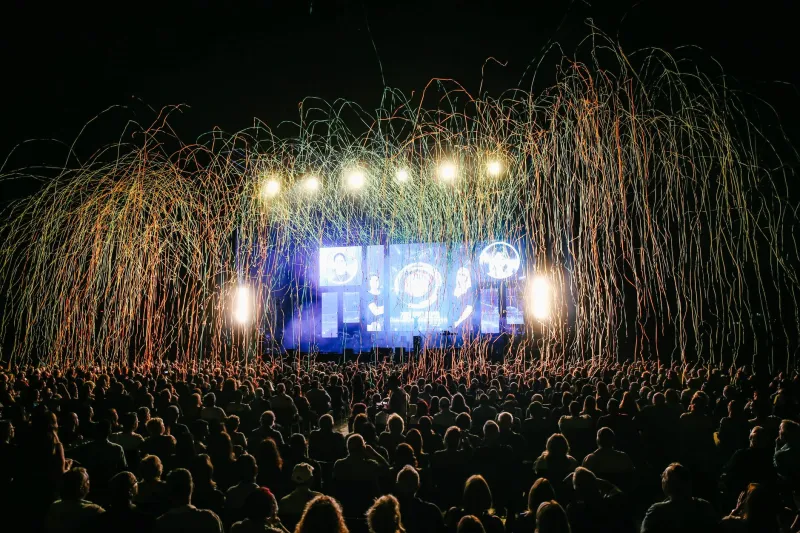
Think about the last time you saw your favorite band live. Not just heard them — experienced them. That electric crackle in the air before the lights drop. The way your chest tightens when the opening riff hits. The inexplicable urge to grab a stranger's arm during the bridge of a song you've heard a thousand times. That's not just music. That's architecture. And here at Rock Legends Wax Museum, we've spent years trying to bottle it.
What we've landed on — through a lot of trial, error, and some genuinely fascinating conversations with neuroscientists and experiential designers — is something we call the Setlist Effect. The idea is simple on the surface: the order and placement of exhibits matters just as much as the figures themselves. But the execution? That's where things get wild.
Why Sequence Is Everything
Every legendary concert has a shape. Think about how Bruce Springsteen opens a show — he doesn't walk out and immediately play "Born to Run." He builds. He earns it. The same logic applies to how we arrange our exhibits.
"People think museum design is about filling space," says one of our lead spatial designers, who's worked on immersive installations across the country. "But it's really about managing emotional tempo. You have to think about what someone feels in room one versus room five. If you peak too early, you lose them. If you never give them a peak at all, they leave feeling flat."
That's why our entry experience is deliberately low-key — a kind of "opening act" energy. Visitors get their bearings, absorb some context, maybe snap a photo or two. We're not hitting them with a Freddie Mercury figure in full Wembley regalia right out of the gate. That moment needs to be earned.
The Neuroscience of the Drop
We talked to Dr. Lena Marsh, a cognitive neuroscientist at a research university in the Pacific Northwest who studies emotional arousal and memory encoding. Her take on why concert sequencing works the way it does was genuinely eye-opening.
"There's a neurochemical rhythm to peak emotional experiences," she explained. "Dopamine isn't just released at the moment of excitement — it's released in anticipation of it. So if you can train someone's nervous system to expect a reward, the reward itself hits harder."
In practical terms, that means the walk toward a major exhibit matters as much as the exhibit itself. We use corridor length, lighting gradients, and even subtle changes in the ambient soundtrack to build anticipation before a visitor rounds a corner and comes face-to-face with a wax Jimi Hendrix mid-solo. That hallway isn't dead space. It's the drum fill before the chorus.
Lighting as a Setlist Tool
Ask any serious concertgoer what separates a good show from an unforgettable one, and lighting will come up within the first thirty seconds. It's not decorative — it's directional. It tells you where to look, what to feel, and when to hold your breath.
Our lighting team works with theatrical consultants who've designed rigs for touring acts. The philosophy they brought in was straightforward: "Treat every exhibit zone like a stage."
That means warm, amber-toned washes in zones meant to evoke nostalgia — your early rock 'n' roll pioneers, the acoustic sessions, the intimate club-era figures. And then, when you move into the arena rock section? The temperature shifts. Cooler whites, harder edges, more contrast. Your eyes adjust, and without realizing it, your body does too. Heart rate upticks slightly. Posture changes. You lean in.
"It sounds almost manipulative when you say it out loud," our lighting director admits with a laugh, "but we're not tricking anyone. We're just removing the friction between the visitor and the feeling. The feeling was always going to be there — we're just making sure nothing gets in the way of it."
Soundtrack Placement: The Invisible Performer
Here's something most visitors never consciously notice but always unconsciously feel: the music in our museum isn't random. It isn't even just "the artist's music playing near their figure." It's choreographed.
We work with an audio designer who maps the entire visitor journey like a DJ set. Volume levels shift as you move through zones. Certain songs are timed to play during the average dwell time in front of specific exhibits. If you're standing in front of our Led Zeppelin display, you're not just hearing "Kashmir" — you're hearing it at the exact moment the arrangement swells, because the track was set to loop in sync with typical visitor flow patterns.
Dr. Marsh backs this up from a scientific angle: "Auditory cues are incredibly powerful memory anchors. When you pair a specific sound with a visual and a spatial experience, you're creating a multi-sensory memory that encodes far more deeply than any single stimulus alone. People don't just remember seeing the exhibit — they remember feeling something while seeing it."
That's the goal. Not a memory of a museum visit. A memory that feels like a show.
The Encore Problem
Every great concert ends with an encore. That moment when the house lights threaten to come up, the band disappears, and then — because the crowd refuses to let go — they come back. It's theater, sure, but it works every single time because it satisfies a deep psychological need for closure-with-a-twist.
Replicating that in a museum exit sequence is genuinely tricky. You can't fake spontaneity. But what you can do is engineer a final exhibit moment that delivers something unexpected — a figure, a scene, or an installation that recontextualizes everything you've just seen.
Our current exit installation does exactly that. Without spoiling it, let's just say it's designed to make you stop walking, turn around, and look back at where you came from. Several visitors have described it as feeling like the last chord of a concert still ringing in the air after the band has left the stage.
That's not an accident. Nothing in here is.
The Walk Is the Show
The Setlist Effect, at its core, is a reminder that experience design and concert production are chasing the same thing: a human being who leaves feeling more alive than when they walked in. The tools are different — wax and lighting rigs instead of guitars and amplifiers — but the emotional contract is identical.
Next time you visit Rock Legends Wax Museum, pay attention to how you feel as you move through the space. Notice when your energy rises. Notice when you slow down. Notice the moment something unexpected hits you harder than you expected.
That's not the museum. That's the show.
And you're already in it.