Who Decides What Rocks? The Hidden Power of Curation in Music Museums
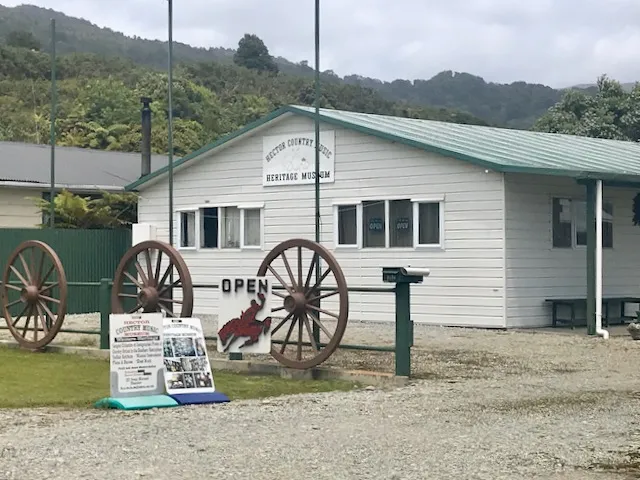
Photo: Mike Dickison, CC BY-SA 4.0, via Wikimedia Commons
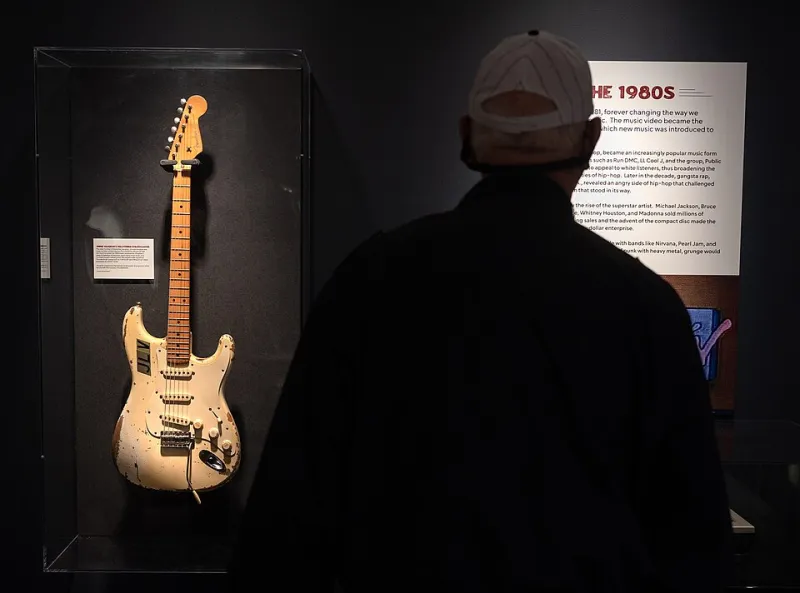
Walk through the halls of Rock Legends Wax Museum and you'll feel it almost immediately — that electric sense that you're standing inside rock history itself. The figures are so lifelike, the staging so precise, that it's easy to forget someone made a very deliberate choice to put this artist on this stage, frozen in this exact moment. But behind every perfectly sculpted guitar pose and every carefully recreated costume is a curatorial decision that carries more weight than most visitors ever realize.
Because here's the thing: museums don't just preserve history. They frame it.
The Setlist Nobody Talks About
Every concert has a setlist — a carefully ordered sequence of songs designed to tell a story over the course of a night. Museum curation works the same way, except instead of songs, you're choosing careers. Instead of a two-hour show, you're compressing decades of rock history into a walkable space.
"People think we just pick whoever's famous," says one senior exhibit designer who's worked with multiple music attractions across the country. "But the real conversation is always about which version of famous. Do you show the scrappy garage band moment, or the arena-filling peak? The gritty origin story or the iconic image everyone already knows? Those decisions add up fast."
At Rock Legends Wax Museum, those decisions start with a deceptively simple question: what moment, if frozen in time, best captures why this artist matters? That question sounds easy until you start applying it. Does Stevie Nicks belong mid-twirl at a Fleetwood Mac stadium show, or in an intimate early performance before the world knew her name? Does the display lean into the mythology or push back against it?
What Gets Left in the Archives
For every figure standing on a museum floor, there are dozens of artists, eras, and moments that didn't make the cut. Some of those omissions are purely logistical — space is finite, budgets are real, and not every legend translates equally well into three dimensions. But other gaps are harder to explain away.
Music historians have long pointed out that rock museums, like rock radio, tend to center a particular version of the genre's story — one that skews heavily toward certain decades, certain sounds, and certain demographics. The British Invasion gets a spotlight. Southern rock gets a corner. But the contributions of Black artists who literally invented the genre's foundational vocabulary? Those displays can be frustratingly sparse at many institutions.
"The curation problem in rock museums mirrors the curation problem in rock history generally," notes Dr. Patricia Owens, a cultural historian who studies popular music's relationship with memory and media. "When you ask 'who shaped rock and roll,' the answer you get depends almost entirely on who's doing the asking — and who's doing the displaying."
This isn't a small-stakes conversation. For younger visitors walking through a museum for the first time, the figures they see aren't just entertainment. They're a curriculum. They're learning, often without realizing it, who gets credited as a legend and who gets footnoted.
The Controversy Behind the Glass
Curation gets especially thorny when it comes to artists whose legacies are complicated by personal history. How do you handle a figure whose music defined a generation but whose biography includes serious allegations or documented harm? Do you display them at all? Do you contextualize the figure with additional information? Do you let the art stand alone and trust visitors to bring their own knowledge?
These aren't hypothetical questions. Museums across the country wrestle with them constantly, and there's no consensus answer. Some institutions have quietly retired certain figures. Others have added interpretive panels that add context without removing the display. A few have chosen to simply let the art speak and leave the moral arithmetic to the audience.
"We take those conversations seriously," says a curatorial consultant who works with entertainment museums on exhibit development. "It's not about canceling history. It's about deciding what kind of institution you want to be and what story you want to tell your visitors."
When Fans Push Back
Visitors aren't passive participants in this process. Social media has fundamentally changed the feedback loop between museums and their audiences. When a beloved artist is missing from a display, fans notice — loudly, immediately, and in public. When a figure is perceived as disrespecting an artist's legacy through poor likeness or unfortunate staging, the comments roll in before the exhibit has even had its opening weekend.
That pressure cuts both ways. Fan campaigns have genuinely influenced exhibit decisions at music attractions around the country, sometimes pushing institutions toward inclusions they wouldn't have prioritized otherwise. Regional artists who might have been overlooked in favor of bigger names have found their way onto floors because local communities showed up and made noise.
But fan pressure can also calcify existing biases. The loudest voices online don't always represent the full breadth of rock's history or its audience. If curation simply follows the most vocal fanbase, museums risk becoming echo chambers for the same familiar narratives rather than spaces that challenge and expand what visitors think they know.
Preserving History vs. Writing It
So which is it — do music museums preserve history or create it? Honestly, it's both. And that's exactly why the curatorial choices made in spaces like Rock Legends Wax Museum matter so much.
A wax figure isn't a neutral object. It's an argument. It says: this person, this moment, this version of the story is worth remembering. When those arguments are made thoughtfully, with attention to the full complexity of rock's history, museums become genuinely powerful tools for cultural memory. When they're made carelessly — or when they simply default to whoever was most famous in 1975 — they quietly shrink the story.
The best music museums are the ones that know the difference. The ones that treat every empty pedestal as a question worth asking, every display as a conversation starter rather than a final verdict.
Next time you're walking through Rock Legends Wax Museum, take a second to notice not just who's on stage — but who isn't. That space between the figures? That's where the most interesting conversations live.